
That small chip in your windshield might look harmless, but it’s actually a ticking time bomb. What starts as a minor annoyance can quickly escalate into a safety hazard that costs hundreds more to fix. Understanding why prompt windshield chip repair matters could save you money, time, and potentially your life.
The Hidden Dangers of “Just a Small Chip”
Many drivers dismiss windshield chips as cosmetic issues that can wait. This misconception stems from not understanding how automotive glass works. Your windshield isn’t just a protective barrier against wind and debris—it’s a critical structural component of your vehicle’s safety system.
Modern windshields are made of laminated safety glass, consisting of two glass layers bonded together with a polyvinyl butyral (PVB) interlayer. When a chip occurs, this carefully engineered structure becomes compromised, creating a weak point that can fail under stress.
1. Prevents Costly Replacement
The financial difference between repair and replacement is substantial. Repairs are significantly more affordable than full windshield replacements, which vary based on your vehicle’s make, model, and glass specifications.
Insurance Coverage Advantage: Most comprehensive insurance policies cover windshield repairs with zero deductible, meaning you pay nothing out of pocket. However, if that chip spreads into a crack requiring replacement, you’ll likely face your policy’s deductible.
Real-World Example: A small bullseye chip that could be repaired for free under insurance coverage can become a 12-inch crack within days, suddenly requiring you to pay your deductible plus the inconvenience of a lengthy replacement process.
2. Maintains Critical Structural Integrity
Your windshield contributes up to 60% of your vehicle’s structural strength in a rollover accident and up to 45% in a frontal collision. This isn’t automotive marketing—it’s physics.
Roof Support System: In rollover accidents, the windshield prevents roof collapse that could cause fatal injuries. A compromised windshield with untreated damage may not provide adequate support when you need it most.
Airbag Deployment: During frontal impacts, passenger-side airbags rely on the windshield as a backstop to inflate properly. A weakened windshield can blow out under airbag pressure, causing the airbag to deploy ineffectively and potentially leading to passenger ejection.
Crash Test Data: According to the Auto Glass Safety Council, vehicles with compromised windshields show significantly reduced performance in standard crash tests, particularly in rollover scenarios.
3. Stops Damage from Spreading
Windshield damage follows predictable patterns based on physics and environmental factors. Understanding these can help you appreciate why time is critical.
Temperature Stress: Glass expands and contracts with temperature changes. A chip that’s stable at 70°F can rapidly spread when exposed to a 40°F morning followed by 90°F afternoon heat. The differential expansion creates stress points that propagate cracks.
Vibration Damage: Every bump, pothole, and highway mile creates microscopic stress on damaged glass. Road vibrations that wouldn’t affect healthy glass can cause chips to spread into long cracks over time.
Moisture Infiltration: Water entering a chip can freeze during cold weather, expanding and forcing the damage to spread. Additionally, moisture can contaminate the damaged area, making future repairs more difficult or impossible.
The 24-48 Hour Rule: Industry data shows that chips are most likely to spread within the first 24-48 hours after impact, especially if exposed to temperature extremes or road vibrations.
4. Preserves Essential Visibility
Clear vision is fundamental to safe driving, yet many drivers underestimate how chips affect their sight lines.
Light Refraction: Even small chips create optical distortions that can refract light unpredictably. This is particularly dangerous during sunrise, sunset, or when driving toward oncoming headlights at night.
Progressive Distortion: As chips collect dirt, moisture, and debris, the visual distortion worsens. What starts as a minor blind spot can become a significant visual obstruction.
Legal Requirements: Most states have specific regulations about windshield damage in the driver’s line of sight. Chips larger than a quarter or cracks longer than six inches can result in traffic citations or failed vehicle inspections.
5. Saves Valuable Time
Time efficiency becomes crucial when you consider the alternatives.
Repair Timeline: Professional chip repairs typically take 15-30 minutes and can often be performed at your location—your home, office, or while you shop.
Replacement Timeline: Windshield replacements require 60-90 minutes of work plus additional cure time before you can safely drive. Many replacements also require scheduling days in advance due to glass ordering and installer availability.
ADAS Considerations: If your vehicle has Advanced Driver Assistance Systems (ADAS), windshield replacement requires additional calibration time and cost, potentially adding 1-2 hours to the process and $200-400 to your bill.
The Science Behind Professional Repair
Understanding how professional repair works helps explain why prompt action is so effective.
Resin Technology: Modern repair resins are specially formulated to match the optical properties of automotive glass. These advanced polymers cure to nearly the same hardness and clarity as the original glass when properly applied.
Pressure and Heat Application: Professional repair equipment uses precise pressure and controlled heat to ensure complete resin penetration and optimal bonding with the existing glass structure.
UV Curing: Ultraviolet light curing creates molecular bonds that restore much of the windshield’s original strength, effectively stopping crack propagation.
When Repair Isn’t Possible
Certain types of damage cannot be repaired and require immediate replacement:
- Chips larger than a quarter
- Cracks longer than 6 inches
- Damage in the driver’s direct line of sight
- Edge damage that compromises structural integrity
- Multiple chips in close proximity
- Damage that has been contaminated with dirt or debris
The Optic-Kleer Advantage
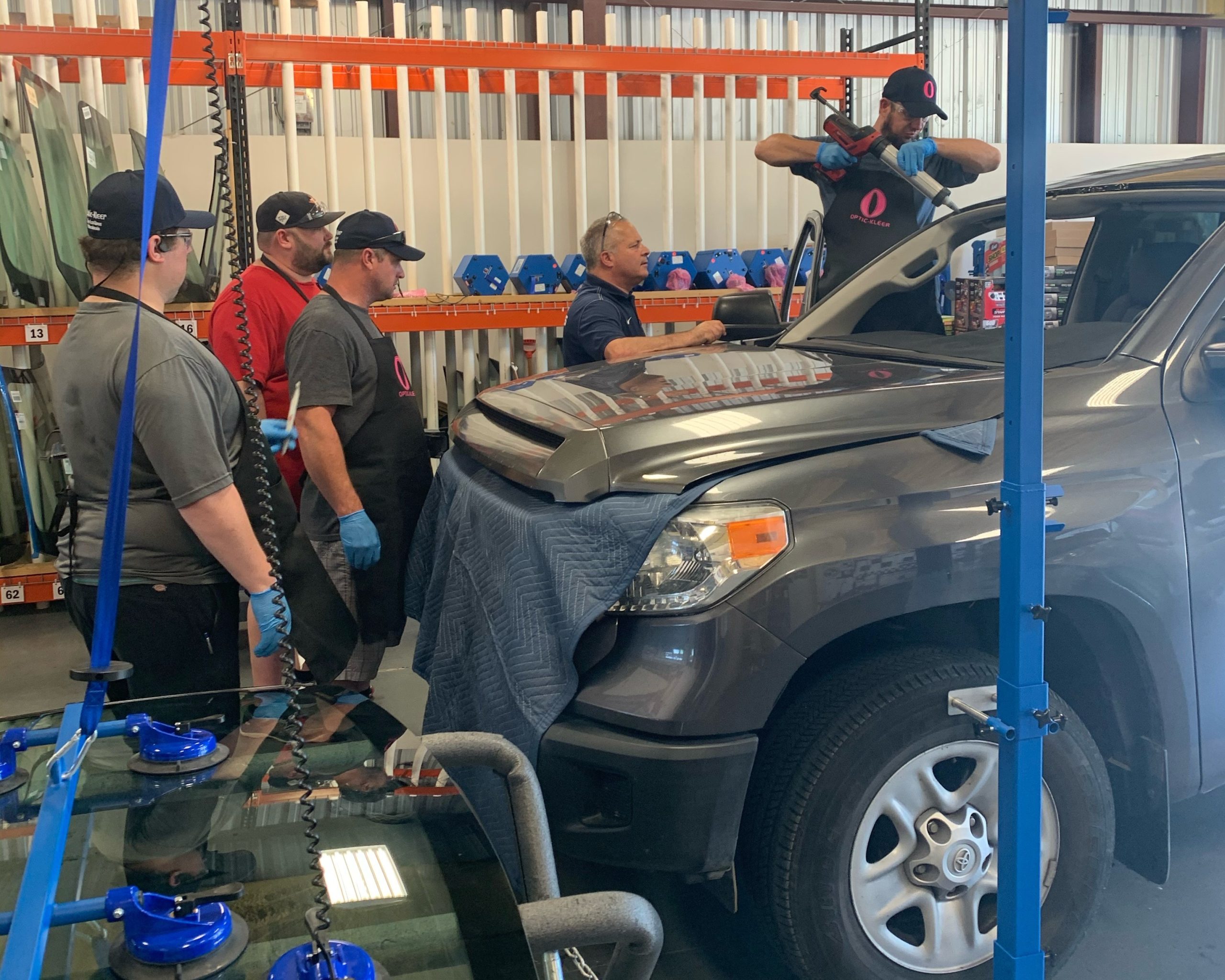
Our certified technicians use industry-leading GlasWeld Zoom professional injectors and optically-matched resins to restore your windshield’s integrity and appearance. Every repair comes with our lifetime guarantee against spreading, and we work directly with insurance companies to eliminate out-of-pocket costs.
Professional Standards: All repairs meet or exceed ROLAGS (Repair of Laminated Automotive Glass Standard) requirements, ensuring quality and safety.
Mobile Service: We come to you, making the repair process convenient and efficient.
Documentation: Every repair includes before and after photos and a service report for your records.
Take Action Now
Don’t gamble with your safety or wallet. That small chip won’t stay small for long. Contact Optic-Kleer today for a free damage assessment and quote. In most cases, we can repair your windshield the same day with no cost to you when covered by insurance.
Remember: The best time to repair a windshield chip was immediately after it happened. The second-best time is right now.