
Your modern vehicle is equipped with an invisible safety network that’s constantly monitoring the road around you. Advanced Driver-Assistance Systems (ADAS) represent one of the most significant automotive safety advances since the seat belt, yet many drivers don’t fully understand how these systems work—or why proper calibration after windshield service is absolutely critical.
Understanding ADAS Technology
Advanced Driver-Assistance Systems use a sophisticated network of cameras, radar, lidar, and ultrasonic sensors to monitor your vehicle’s surroundings in real-time. This network of sensors acts as your vehicle’s eyes and ears, processing thousands of data points per second to enhance safety and driving comfort.
Key ADAS Safety Features
Modern vehicles commonly include these ADAS features:
Lane Departure Warning – Monitors lane markings and alerts you when drifting without signaling Automatic Emergency Braking – Detects imminent collisions and applies brakes automatically Adaptive Cruise Control – Maintains safe following distance by adjusting speed automatically Forward Collision Alert – Warns of potential front-end collisions before they occur Blind Spot Monitoring – Detects vehicles in your blind spots and provides warnings Parking Assistance – Guides parking maneuvers using proximity sensors and cameras
The Critical Windshield Connection
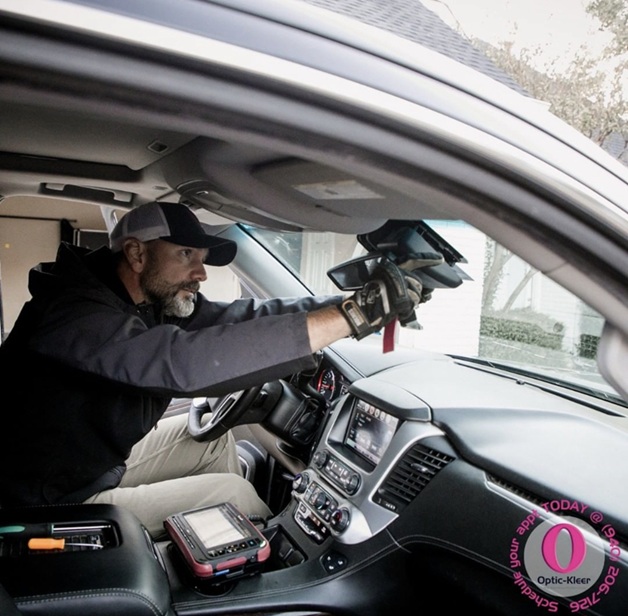
Many drivers don’t realize that their windshield serves as more than just protective glass—it’s a mounting platform for critical ADAS sensors. Most forward-facing cameras are mounted directly to the windshield, typically behind the rearview mirror or in the upper center area.
This placement makes ADAS systems highly sensitive to even minor adjustments or replacements. When a windshield is removed and reinstalled, or when the glass itself is replaced, the camera’s position can shift by mere millimeters—enough to throw off the entire system’s accuracy.
The Science Behind Sensor Functionality
Camera-Based Systems
Forward-facing cameras capture and analyze visual data from the road ahead. Advanced image processing algorithms identify lane markings, other vehicles, pedestrians, road signs, and potential obstacles. These cameras must be positioned with extreme precision to ensure accurate object detection and distance calculation.
Radar Technology
Radar sensors emit radio waves and measure the time it takes for signals to bounce back from objects. This technology excels at detecting distance and relative speed, making it ideal for adaptive cruise control and collision avoidance systems. Radar sensors are typically mounted in the front bumper but rely on integration with camera data for optimal performance.
Ultrasonic Sensors
Short-range ultrasonic sensors use sound waves to detect nearby objects, primarily used for parking assistance and low-speed maneuvering. While not windshield-mounted, these sensors work in coordination with camera systems to provide comprehensive situational awareness.
Data Fusion
The real intelligence of ADAS lies in data fusion—the process of combining information from multiple sensors to create a comprehensive understanding of the driving environment. When one sensor provides inaccurate data due to improper calibration, it can compromise the entire system’s effectiveness.
Why Calibration Is Essential
ADAS calibration is the process of ensuring that all sensors are properly aligned and communicating accurate information to the vehicle’s computer systems. This process becomes essential whenever work is performed that could affect sensor positioning.
When Calibration Is Required
Windshield Replacement – Any windshield replacement requires ADAS calibration if cameras are mounted to the glass Collision Repair – Front-end damage that affects bumper-mounted sensors necessitates recalibration Suspension Work – Changes to vehicle height or alignment can affect sensor angles Wheel Alignment – Significant alignment adjustments may require sensor recalibration
Types of Calibration
Static Calibration – Performed in a controlled environment using specific targets and positioning equipment while the vehicle is stationary Dynamic Calibration – Requires driving the vehicle under specific conditions while the system learns and adjusts to real-world parameters
The Hidden Dangers of Skipping Calibration
Driving with improperly calibrated ADAS systems creates serious safety risks that may not be immediately apparent.
Inaccurate Object Detection
Misaligned cameras may fail to properly identify vehicles, pedestrians, or obstacles in the vehicle’s path. This can result in delayed or absent collision warnings, potentially leading to accidents that the system was designed to prevent.
False Alerts and System Shutdowns
Poorly calibrated sensors often trigger false warnings or may cause the system to shut down entirely. Beyond the annoyance factor, drivers may become complacent about legitimate warnings or may disable safety systems altogether.
Compromised Emergency Response
Automatic emergency braking and other active safety features rely on precise sensor data to function correctly. Inaccurate calibration can result in delayed response times or, in worst-case scenarios, failure to activate when needed most.
Insurance and Liability Implications
Many insurance companies and vehicle manufacturers require proper ADAS calibration after windshield replacement. Failure to calibrate may void warranties or complicate insurance claims in the event of an accident involving ADAS-related systems.
Professional Calibration Process
Proper ADAS calibration requires specialized equipment, manufacturer-specific procedures, and certified technicians who understand the intricacies of each vehicle system.
Equipment Requirements
Professional calibration requires manufacturer-approved targets, positioning systems, and diagnostic equipment. Each vehicle make and model may have specific requirements for target placement, distance measurements, and environmental conditions.
Manufacturer Guidelines
Automakers provide detailed calibration procedures that must be followed precisely. These procedures specify everything from ambient lighting conditions to target positioning tolerances measured in millimeters.
Documentation and Verification
Professional calibration includes comprehensive documentation showing that the system has been properly reset and is functioning within manufacturer specifications. This documentation provides proof of proper service and may be required for warranty claims.
The Optic-Kleer Calibration Advantage
At Optic-Kleer, we understand that ADAS calibration isn’t optional—it’s a critical safety requirement. Our certified technicians use industry-leading Launch Mobile ADAS calibration systems and follow manufacturer-specific procedures for every vehicle we service.
Our Calibration Process
Pre-Service Assessment – We identify all ADAS features in your vehicle and determine calibration requirements before beginning windshield work Manufacturer-Specific Procedures – Each calibration follows exact OEM guidelines for your vehicle’s make, model, and year Professional Equipment – We use certified calibration equipment that meets or exceeds manufacturer standards Comprehensive Documentation – Every calibration includes detailed reporting for your records and peace of mind Quality Verification – We test system functionality to ensure proper operation before returning your vehicle
Same-Day Service
Most ADAS calibrations can be completed immediately following windshield installation, allowing you to drive away with full confidence in your vehicle’s safety systems. The calibration process typically takes between 30 minutes to 2 hours, depending on your vehicle’s specific requirements.
The Future of Vehicle Safety
ADAS technology continues to evolve rapidly, with new features and capabilities being introduced regularly. As vehicles become increasingly automated, proper sensor calibration becomes even more critical to safe operation.
Understanding the importance of ADAS calibration helps you make informed decisions about windshield service and ensures that your vehicle’s safety systems continue to protect you and your passengers as designed.
Don’t Compromise on Safety
Your vehicle’s ADAS features are sophisticated safety systems designed to prevent accidents and save lives. Proper calibration after windshield replacement isn’t just recommended—it’s essential for maintaining the integrity of these life-saving technologies.
When you need windshield service, choose a provider who understands the critical importance of ADAS calibration and has the equipment, training, and commitment to do it right.